
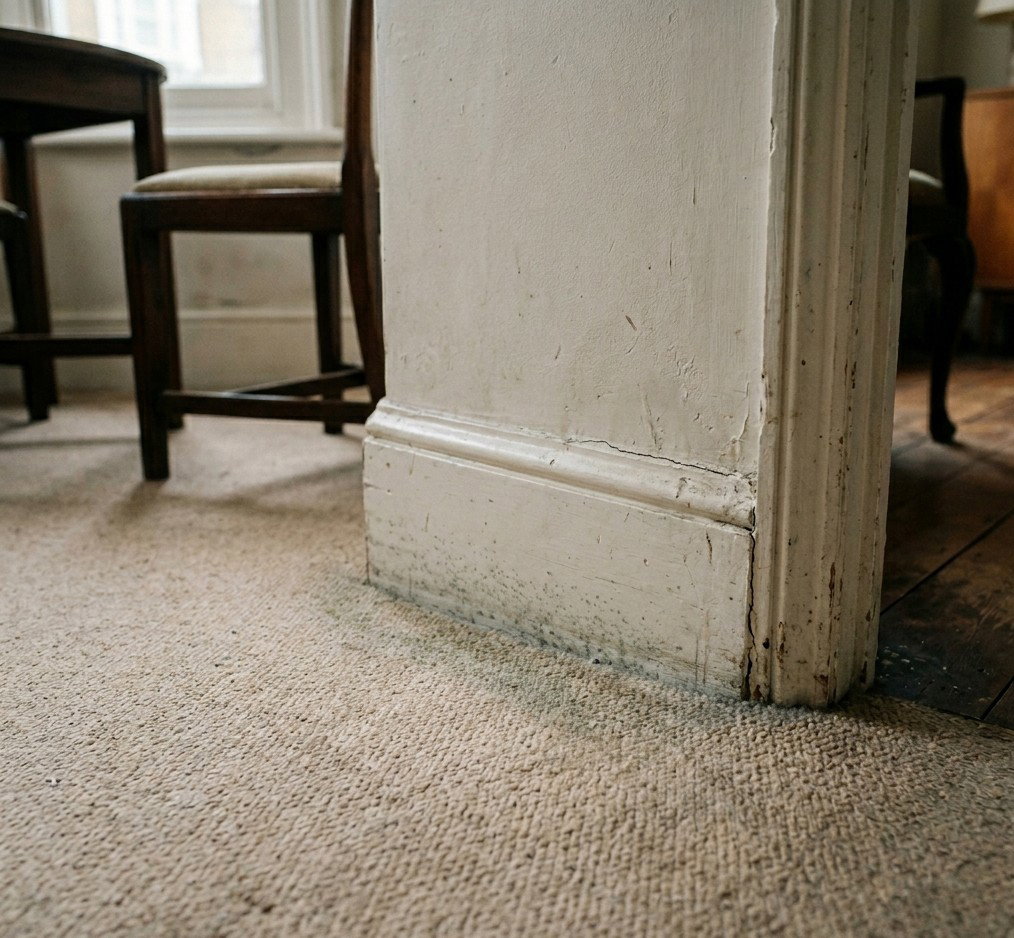
There is a particular kind of smell that announces itself the moment you step into a ground floor flat – low, earthy, faintly organic, and entirely resistant to air fresheners, candles, and every scented product stacked under the kitchen sink. It does not belong to any single room. It simply lives there, woven into the atmosphere, and no amount of cleaning the surfaces seems to shift it. In the majority of cases, the culprit is the carpet – or more precisely, what is happening beneath it. Understanding where the smell actually originates is the first step towards eliminating it for good rather than temporarily masking it.
Why Ground Floor Flats Are Particularly Vulnerable
The Conditions That Make Damp Odour Almost Inevitable
Ground floor properties sit directly above or on a concrete slab, suspended timber subfloor, or compacted earth – all of which generate moisture that migrates naturally upward. In London, where a significant proportion of the housing stock dates from the late Victorian and Edwardian periods, ground floor flats were often not originally designed as self-contained dwellings. Damp-proof courses were often absent, inadequate, or have since degraded. The result is a consistent low-level transfer of moisture from the building structure into the living space above.
This moisture is absorbed readily by carpet – and especially by the underlay beneath it, which acts as a highly efficient sponge. Combine this with the typically reduced airflow of a ground floor flat, where windows are frequently kept closed for security reasons and natural through-ventilation is limited, and the conditions for persistent damp smell become almost self-sustaining. Condensation from everyday activities – cooking, showering, and drying laundry indoors – adds further to the moisture load on a carpet already dealing with what comes from below.
Identifying the Source – Carpet, Underlay, or Something Deeper?
Establishing Where the Problem Actually Lives Before Treating It
Before reaching for any cleaning product, it is worth establishing where the smell actually originates. Treating the carpet surface when the real problem lies in the underlay or the subfloor is an extremely common mistake – and one that explains why so many DIY attempts produce only brief improvement before the odour returns.
Lift a corner of the carpet in the worst-affected area and smell the underlay directly. If the odour is significantly stronger below the carpet than above it, the underlay is the primary source. Check for discolouration – dark patches, a grey or brown cast, or visible mould spotting all indicate that moisture has been present for some time. If the subfloor is concrete, a white chalky residue on its surface signals salts being drawn up through the slab by rising moisture.
If the carpet and underlay appear relatively dry but the smell persists, the problem may lie in the building fabric itself – walls, floor void, or subfloor – and no carpet treatment alone will resolve it permanently.
The Immediate Response – Ventilation and Drying First
Why Airflow Must Come Before Any Other Treatment
Any attempt to deodorise or clean a carpet that is still damp, or that sits in a persistently moist environment, is largely wasted effort. Moisture is the engine driving the smell, and until the ambient conditions improve, even the best treatment will produce only temporary results.
Open windows and internal doors to create airflow through the flat, even in cold weather – fresh outdoor air is significantly drier than the stale, moisture-laden air that accumulates in a poorly ventilated ground floor room. Direct a fan across the carpet surface to accelerate evaporation. A dehumidifier running for twenty-four to forty-eight hours before treatment begins will make a measurable difference to both the carpet and the room’s atmosphere.
If the carpet has been recently wet – from a leak, localised flooding, or undetected water ingress – dry it as thoroughly and quickly as possible before anything else is attempted. A carpet that dries slowly in a damp environment can develop mould within two to three days, at which point the odour problem becomes significantly harder to resolve.
Treating the Carpet – Deodourising Methods That Work
Bicarbonate of Soda, White Vinegar, and Enzyme Cleaners
Once the room has been ventilated and the carpet is as dry as conditions allow, surface treatment can begin in earnest.
Bicarbonate of soda remains the most accessible and genuinely effective deodouriser for domestic carpet use. Sprinkle it liberally and evenly across the affected area, work it lightly into the pile with a soft brush, and leave it for as long as possible – a minimum of several hours, with overnight producing considerably better results. Vacuum thoroughly to remove all residue. In a ground floor flat with a persistent damp smell, this will likely need repeating on several successive days rather than being applied once and considered complete.
A solution of equal parts white vinegar and water, applied sparingly with a spray bottle and allowed to dry fully, will neutralise organic odour compounds rather than mask them. The vinegar scent disappears entirely as it dries. Avoid saturating the carpet – excess liquid sitting in the pile only adds to the moisture problem you are already managing.
Enzyme-based carpet cleaners, available from most pet supply retailers, are worth considering where the damp smell has a distinctly biological quality – mould, mildew, or any organic source. These products break down odour compounds at a molecular level and tend to produce more lasting results than bicarbonate of soda alone on deeply embedded smells.
The Underlay Problem – When the Smell Lives Below the Surface
Why Treating the Carpet Alone Often Falls Short
Carpet underlay is extraordinarily good at absorbing moisture – which is, ironically, among its intended properties. In a ground floor flat with ongoing damp issues, the underlay frequently becomes the primary reservoir of both moisture and odour, and no surface treatment to the carpet above will eliminate a smell that emanates from below.
If inspection reveals that the underlay is consistently damp, heavily discoloured, or visibly affected by mould, replacement is the only genuinely effective solution. Attempting to dry and deodorise compromised underlay in situ is rarely effective, and never so when the moisture source is ongoing. When replacing underlay in a ground floor flat, choose a product with built-in moisture resistance or anti-microbial treatment. These are widely available and represent a modest additional cost relative to the total expense of relaying carpet.
Recognising When the Problem Has Gone Further
Mould, Mildew, and When Smell Becomes a Health Concern
A damp smell that returns within days of treatment, or that carries a distinctly biological quality – darker and more pungent than ordinary mustiness – often signals active mould growth rather than residual damp. Mould in carpet and underlay is not always visible from the surface; it frequently develops on the underside of the carpet backing and the upper face of the underlay, concealed until the carpet is lifted.
Key signs include dark speckling on the carpet backing, a smell that intensifies in warm or humid conditions, and rapid return after cleaning. The health implications at this stage are worth taking seriously. Mould spores aggravate respiratory conditions in an enclosed living space – a particular concern for households with young children, elderly occupants, or anyone with asthma or allergies.
Where mould is confirmed in the carpet or underlay, replacement of the affected sections is the appropriate response. Continued cleaning of mould-affected carpet is unlikely to be effective and may disperse spores further into the room environment.
Long-Term Prevention – Keeping Damp Smell Out for Good
Ventilation, Dehumidification, and Smarter Material Choices
Preventing the smell from returning means addressing the underlying conditions that produce it, rather than managing it reactively after it reappears.
A dehumidifier used consistently in the main living areas – not only during visible damp events but as a standard feature of daily life – is one of the most effective investments available to ground floor occupants. Modern units are quiet, relatively energy-efficient, and remove several litres of moisture from the air each day. In a London ground floor flat where damp is structural or seasonal, a dehumidifier is less a luxury than a practical necessity.
Ventilation habits are equally important. Ground floor security concerns are understandable, but trickle vents, mechanical ventilation units, and functioning air bricks all help manage moisture without compromising safety. Avoid drying laundry indoors whenever possible – a single load releases up to two litres of water vapour into the indoor atmosphere as it dries.
When carpets need replacing in a prone ground floor flat, a shorter-pile option with a moisture-resistant underlay is a better choice than deep-pile carpet, which traps and retains moisture far more readily. Some occupants in persistently damp ground floor properties choose to forgo fitted carpet altogether in favour of hard flooring with removable rugs – an arrangement that allows the floor to breathe and makes inspection of the subfloor straightforward.
When the Smell Keeps Coming Back
The Line Between a Carpet Problem and a Building Problem
If damp smell returns persistently despite thorough cleaning, underlay replacement, and consistent ventilation, the problem almost certainly lies in the building fabric rather than the carpet. Rising damp, failed or absent damp-proof courses, and moisture ingress through ground-level walls are structural issues that no carpet treatment can resolve.
In a rented ground floor flat, persistent damp that affects the habitability of the property may constitute a housing disrepair issue that the landlord has a legal obligation to address. Raising it formally in writing, with photographic evidence where possible, is more effective than informal requests and creates a record should the issue escalate. In an owned property, a survey by a qualified damp specialist is the appropriate next step – the source and severity of moisture ingress varies considerably between buildings, and effective remediation depends on accurate diagnosis rather than a generic solution.